News
What the Society is doing, and what is happening in sustainable energy technologies.
Global
-
Why did Antarctica freeze millions of years earlier than the Arctic?
Antarctica has been buried in ice for roughly 34 million years, while the Arctic did not develop major ice sheets until around 5 million years ago, a gap of some 29 million years
-
Can a building’s energy system recalibrate itself during a heatwave?
Building energy systems are usually tuned to run as efficiently as possible, which works well until a heatwave arrives, sensors drift out of calibration or equipment quietly degrades.
-
Can a liquid store heat until it is needed?
Certain sugar alcohols can be melted and then cooled far below their freezing point without turning solid, holding the stored heat in place until something prompts them to crystallise.
-
How can urban green spaces reduce the urban heat island effect?
Urban heat islands raise city temperatures and drive up energy use. Research on urban tree cooling sets out how much vegetation can bring city-centre temperatures down.
-
Can free plug-in batteries cut UK household energy bills by 30%?
The UK plans to give plug-in home batteries to low-income households. They charge on cheap overnight electricity, release it at peak, and need no electrician to install.
-
Can you use an old coal mine as a clean heating system?
Cumberland, British Columbia, shipped coal for 80 years. Researchers are now testing whether the water left in those tunnels can heat and cool the whole town.
-
Are solar panels cheaper than using the national grid?
When war and sanctions cut off Sana'a's electricity, residents installed their own solar systems rather than wait.
-
Can plastic waste really replace bricks?
Recycled-plastic bricks are usually tested in only one direction. An Indonesian team tested them both ways, and the strength did not hold up the way the headline figure suggests.
-
Could your body heat soon charge your devices?
A team at the University of Surrey has built a layered metal-polymer material that turns waste heat into electricity, and unlike the materials this field has relied on, it is
-
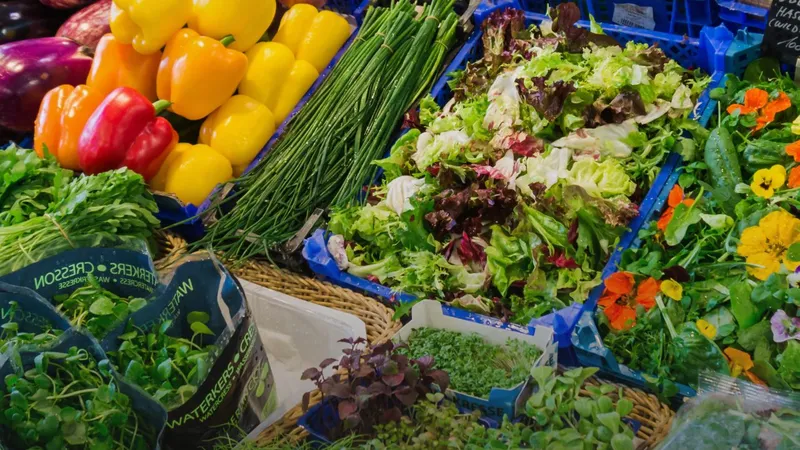
Why does the UK import 2.7 billion tonnes of vegetables a year?
Only 58 per cent of the vegetables eaten in the UK are grown here. Nottingham researchers redesigned a standard greenhouse to find out how much of that gap is down to design alone.
-
Could seawater power the next generation of batteries?
A University of Houston team has pushed sodium-ion energy density up by more than 15 per cent, closing the gap with lithium using an element that can be extracted from seawater.